During pregnancy, maternal plasma contains circulating cell-free DNA (cfDNA), comprising short DNA fragments releases into the blood stream primarily through apoptosis of cells. A distinct proportion of this cfDNA originates from placental trophoblastic cells and represents the fetal genomic contribution in the maternal plasma. This placental-derived component, referred to as circulating cell-free fetal DNA (cffDNA), becomes reliably detectable in maternal plasma as early as 7 weeks of gestation.
Despite its clinical significance, cffDNA constitutes only a minor fraction of total maternal plasma cfDNA depending on gestational age and represents the fetal genome. These fragments are intermixed with a substantially higher background of maternal-derived cfDNA, creating a complex analytical environment for precise genomic assessment.
Fetal aneuploidies such as Trisomy 21 (Down syndrome), Trisomy 18 (Edwards syndrome), Trisomy 13 (Patau syndrome) and Sex chromosome aneuploidies do not produce large structural rearrangements detectable by conventional means in maternal plasma. Instead, they manifest as extremely small quantitative shifts in chromosomal representation.
Low fetal fraction samples represent one of the most demanding clinical scenarios. In these cases, the difference between euploid and aneuploid chromosomal representation may approach the limits of statistical resolution. Therefore, one needs a clinically robust NIPT solution that combines an optimized library preparation chemistry, uniform genome coverage, and statistically robust bioinformatics analysis platform.
The LeoNext cfDNA NIPT Solution offers a fully integrated, end-to-end workflow that supports laboratories across every stage of the workflow from cfDNA extraction and library preparation (with options for both automated and manual workflows) to data analysis and reporting which ensures reproducibility, scalability, and high-throughput capability, enabling laboratories to deliver consistent and reliable results with operational efficiency.
In non-invasive prenatal testing (NIPT), analytical accuracy begins long before sequencing, it starts with efficient and high-fidelity extraction of circulating cell-free DNA (cfDNA) from maternal plasma.
During pregnancy, fetal-derived cfDNA (cffDNA) represents only a small fraction (typically 3–15%) of total circulating cfDNA. These fragments are short, highly fragmented, and present in low concentration. Any inefficiency during extraction can disproportionately reduce fetal fraction, directly impact assay sensitivity and increase the risk of false negatives or test failur
Whether implemented via validated manual workflows or fully automated extraction platforms, the extraction chemistry must preserve fragment integrity while maximizing fetal fraction retention.
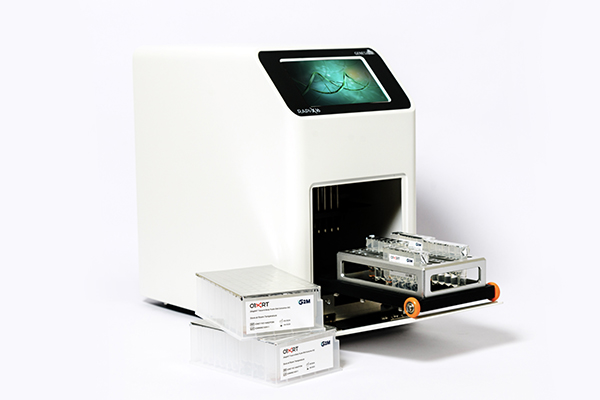
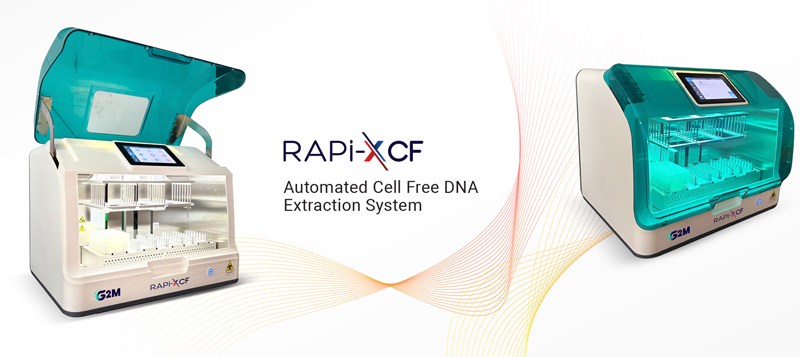
The LeoNext cfDNA NIPT solution is strengthened by integration with the RAPi-X CF Automatic Cell Free DNA Extraction System, engineered specifically for high-efficiency isolation of circulating DNA from plasma and serum samples.
Leveraging precision-controlled magnetic rod technology and disposable tip-based processing, RAPi-X CF automates the complete workflow—from bead binding and washing to controlled elution in minimum 8 and up to 32 samples—ensuring
The LeoNext cfDNA NIPT kit is an advanced, low-pass whole-genome sequencing (WGS)-based solution designed for highly sensitive detection of fetal chromosomal aneuploidies from maternal plasma. The kit integrates optimized cfDNA library preparation chemistry with uniform genome-wide coverage to enable reliable chromosomal analysis using low-depth WGS.
This assay screens for cell-free fetal DNA (cffDNA) extracted from maternal peripheral whole blood, enabling detection of genome-wide fetal chromosomal anomalies in pregnancies at ≥10 weeks of gestation.
The assay can identify whole-chromosome aneuploidies as well as partial duplications and deletions across all autosomes, reporting sex chromosome aneuploidies (SCAs) as well as microdeletions.
Covers all 23 pairs of chromosomes – including autosomal aneuploidies (like Common trisomies: Down Syndrome (T21) Edward Syndrome (T18) Patau Syndrome (T13)) and sex chromosomal aneuploidies.
Covers all 23 pairs of chromosomes – including autosomal aneuploidies (like Common trisomy: Down Syndrome (T21) Edward Syndrome (T18) Patau Syndrome (T13)), sex chromosomal aneuploidies and 90+ micro-deletions and micro-duplication Syndromes like Prader-Willi Syndrome, Cri-du-chat, DiGeorge Syndrome etc.
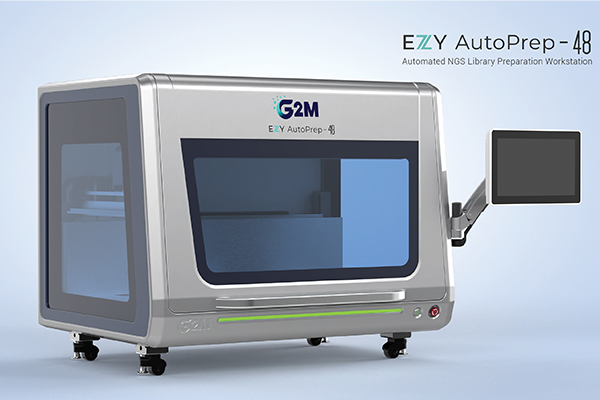
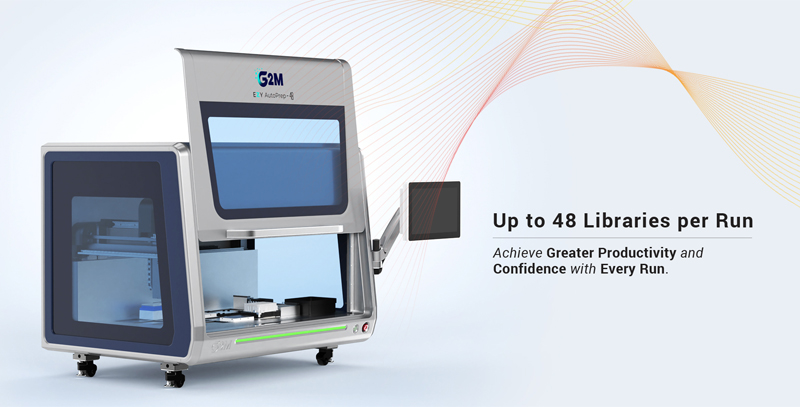
To deliver true end-to-end precision in NIPT library preparation, our advanced cfDNA chemistry seamlessly integrates with the EZY AutoPrep-48 and EZY AutoPrep-24 automated NGS library preparation workstations—engineered for high reproducibility, contamination control, and scalable throughput. For medium- to high-throughput clinical environments, the EZY AutoPrep platforms provide true walk-away automation, executing end-repair, adapter ligation, PCR amplification, purification, and quantitation with integrated thermal cycling, magnetic bead processing, and on-deck fluorescence quantification.
Libraries generated using the LeoNext cfDNA Library Prep Kit are designed for compatibility with major short-read sequencing platforms (supporting single-end chemistry flow cell workflows). This cross-platform flexibility allows laboratories to seamlessly integrate the prepared libraries into their existing sequencing infrastructure, ensuring scalability, operational efficiency, and consistent data quality for NIPT applications.
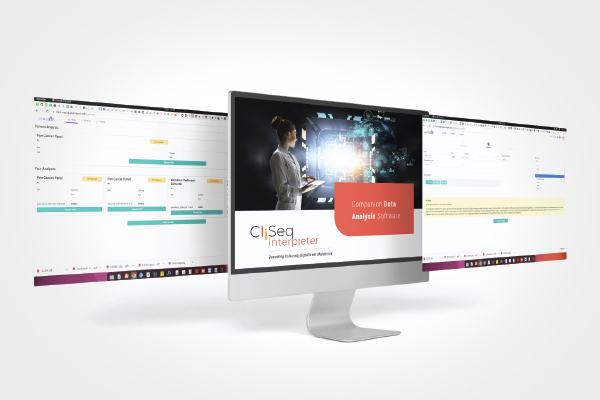
For Data analytics and reporting, our cloud-based platform, Cliseq Interpreter's workflow pipelines are designed and tested to work seamlessly with a variety of G2M NGS Clinical Panels including NIPT. NIPT analysis is based on low-depth Whole genome sequencing. With Cliseq Interpreter software, the time to analyse the NIPT data and reporting is significantly reduced to upto 1 hour per sample.
Note: "The assay can detect aneuploidy in a given sample, regardless of whether the pregnancy is singleton or twin. However, it cannot determine the type of pregnancy (e.g., twin) or distinguish between individual fetuses. It will solely report the presence or absence of aneuploidy."
| Commercial Name | Cat No. | Pack Size | Platform |
|---|---|---|---|
| LeoNext NIPT NGS Test Kit | G710022-1 | 48 T | Illumina |
| G710022-2 | 96 T | Illumina | |
| G710022-3 | 96 T - EZY | Illumina - EZY | |
| LeoNext NIPT NGS Test Kit | G710022-4 | 48 T | MGI |
| G710022-5 | 96 T | MGI | |
| G710022-6 | 96 T - EZY | MGI - EZY | |
| LeoNext NIPT NGS Test Kit | G710022-7 | 48 T | Aviti |
| G710022-8 | 96 T | Aviti | |
| G710022-9 | 96 T - EZY | Aviti - EZY | |
| LeoNext NIPT NGS Test Kit | G710022-10 | 48 T | Thermo |
| G710022-11 | 96 T | Thermo | |
| G710022-12 | 96 T - EZY | Thermo - EZY |
Since its inception in 2016, Genes2me has been constantly striving towards setting a benchmark in the diagnostics space by introducing premium quality (Made in India) diagnostic kits which are CE-IVD, ISO-13485:2016, and ISO 9001:2015 certified, assuring our clients of unparalleled quality and compliance with international standards.
© 2026 Genes2me. All rights reserved.