
Breast Cancer Awareness Month: Advancing Precision Testing Through Molecular Diagnostics
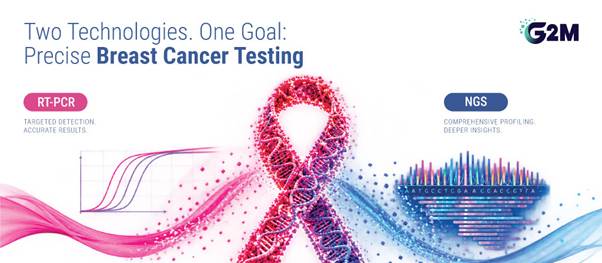
It’s Breast Cancer Awareness Month, and we’re looking beyond awareness alone, toward the molecular insights that can support earlier risk assessment, better disease characterization, and more informed clinical decision-making.
Breast cancer is not a single disease. Differences in inherited and acquired genetic alterations, homologous recombination status, and tumor evolution can influence both risk and treatment strategy. As precision oncology continues to evolve, molecular testing has become an increasingly important part of understanding these differences.
At Genes2Me, our oncology portfolio brings together Next-Generation Sequencing (NGS) panels and targeted Real-Time PCR testing to support different molecular testing needs across breast cancer care. From comprehensive genomic profiling and BRCA1/2 assessment to HRD evaluation and liquid biopsy-based monitoring, these technologies provide complementary approaches to clinically relevant molecular information.
This Breast Cancer Awareness Month, we’re highlighting how Genes2Me molecular assays can support laboratories, oncologists, pathologists, and genetic counsellors in bringing precision testing closer to clinical decision-making.
Why Breast Cancer Needs More Than One Molecular Approach
Breast cancer is one of the most commonly diagnosed cancers in the world. Mammography and clinical screening have done a lot to improve survival by catching disease early, but another layer of information can be gained by understanding the molecular characteristics of cancer and inherited risk.
Breast cancer can involve germline variants, somatic alterations, genomic instability, and acquired resistance mechanisms, making molecular testing an important part of modern precision oncology.
Different testing technologies can address different molecular questions. NGS enables broader genomic profiling across multiple genes and alteration types, while targeted Real-Time PCR can provide focused detection of specific clinically relevant variants.
Rather than replacing one another, these approaches can form part of a complementary molecular testing strategy — depending on the clinical question, variants of interest, sample type, and testing requirements.
1. The Genes2Me BRCA 1/2 NGS Assay: Germline and Somatic Screening
Mutations in the BRCA1 and BRCA2 tumor suppressor genes explain a large share of hereditary breast and ovarian cancers. They also matter when choosing treatment for somatic tumors.
The Genes2Me BRCA 1/2 NGS Assay provides comprehensive assessment of BRCA1 and BRCA2 across the whole coding sequence and promoter regions, enabling detection of multiple classes of genomic alterations.
| Genes Covered | Covered Region | Target Size | Mutation Types | Sample Types | Targeted Therapies | Assay Uniformity |
| 2 (BRCA1 and BRCA2) | Whole CDS (+/-40bp) and promoter regions | 0.02 Mb | SNVs, InDels, CNVs, Rearrangements | Blood (Germline) & FFPE Tissue (Somatic) | PARP Inhibitors: Olaparib, Talazoparib | >99% Coverage Uniformity @ 0.2X |
Key Clinical Advantages
● Full coding region and promoter coverage: The assay covers the whole coding sequence and promoter regions, enabling detection of SNVs, small insertions and deletions (InDels), copy number variations (CNVs), and structural rearrangements.
● Therapy matching: BRCA status can contribute to treatment decision-making, including consideration of targeted therapies such as PARP inhibitors in appropriate clinical contexts.
● Efficiency and uniformity: Coverage is highly uniform, supporting consistent sequencing performance while reducing coverage bias.
When Targeted BRCA Testing Is the Question
While NGS provides broad genomic information and can identify multiple classes of BRCA alterations, not every testing requirement calls for a comprehensive sequencing panel.
For laboratories and clinical settings where the objective is focused detection of specific BRCA1 and BRCA2 variants, a targeted Real-Time PCR approach can provide a complementary testing option.
2. The Genes2Me BRCA-Q Real-Time PCR Kit: Targeted Detection of BRCA1/2 Variants
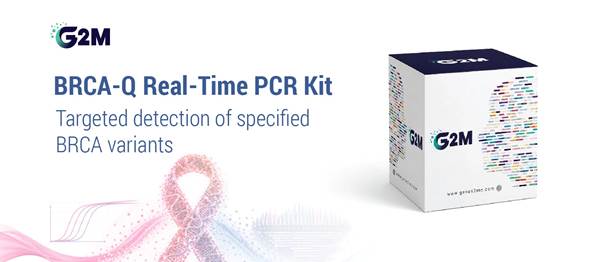
BRCA1 and BRCA2 variants are important biomarkers in hereditary breast and ovarian cancer risk assessment. Identifying specific pathogenic variants can support risk stratification, preventive care, family counselling, and clinical management.
The Genes2Me BRCA-Q Real-Time PCR Kit is a CE-IVD qualitative in vitro diagnostic assay designed for the detection and allelic differentiation of eight specified BRCA1 and BRCA2 genetic polymorphisms associated with breast and ovarian cancer.
The assay detects seven BRCA1 variants and one BRCA2 variant:
BRCA1: 185delAG, 4153delA, 5382insC, 3819delGTAAA, 3875delGTCT, 300T>G (Cys61Gly), 2080delA
BRCA2: 6174delT
Targeted Testing Through Real-Time PCR
BRCA-Q uses Real-Time PCR with melting curve analysis and allele-specific fluorescent probes to distinguish wild-type and mutant alleles.
Following amplification, melting curve analysis evaluates the melting temperature (Tm) of the probe–amplicon complexes. Differences in Tm allow discrimination between wild-type and mutant allelic variants, including heterozygous samples.
The built-in internal control helps verify DNA input, reagent integrity, and PCR performance, with a Ct cut-off of ≤32 for a valid result.
Key Features of BRCA-Q
● Eight specified BRCA variants: Detects and differentiates seven BRCA1 variants and one BRCA2 variant.
● Three-channel multiplex design: Enables simultaneous assessment of wild-type allele, mutant allele, and internal control.
● Melting curve-based allelic discrimination: Supports differentiation of wild-type and mutant variants based on distinct melting temperatures.
● High analytical and clinical performance: The assay demonstrates 100% analytical sensitivity and specificity, 99% accuracy, and 99% clinical sensitivity and specificity.
● Low detection limit: Detects as little as 1 genome equivalent per 1.0 ng of human DNA per reaction.
● Built-in quality control: The internal control helps confirm DNA input and PCR validity for every run.
● Platform flexibility: Validated on Thermo Fisher QuantStudio 5, Bio-Rad CFX96, Roche LightCycler 480, and Genes2Me RapiCycler 96 platforms.
NGS or Targeted RT-PCR? Choosing the Right Molecular Approach
The two approaches address related but distinct testing needs.
BRCA 1/2 NGS Assay
Best suited to broader BRCA assessment, with coverage extending across the coding and promoter regions and the ability to identify multiple alteration types, including SNVs, InDels, CNVs, and rearrangements.
BRCA-Q Real-Time PCR Kit
Designed for focused detection and allelic differentiation of eight specified BRCA1/2 variants using a targeted Real-Time PCR workflow.
Together, they illustrate how different molecular technologies can support different testing strategies within precision breast cancer diagnostics — from broader genomic characterization to targeted variant detection.
3. Looking Past BRCA: The CancerCheck Core (HRD Assay)
BRCA1/2 mutations are a well-known cause of Homologous Recombination Deficiency (HRD), but many breast cancer patients show an HRD phenotype even without a detectable BRCA mutation. This pattern is often called BRCAness. Finding these patients matters because it can open up PARP inhibitors and platinum-based chemotherapy to people who might otherwise miss out.
The Genes2Me CancerCheck Core (HRD Assay) is a targeted hybridization-capture NGS panel that looks at more than 51,000 genome-wide Single Nucleotide Polymorphisms (SNPs) and also covers the whole coding sequence of BRCA1 and BRCA2.
Key Highlights
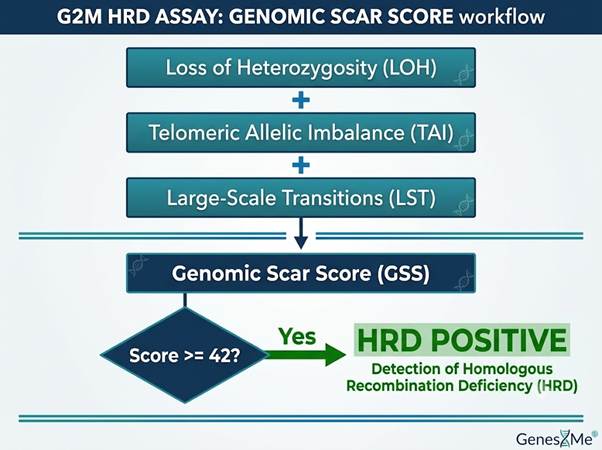
● Genomic Scar Score (GSS): Measures genomic instability using three markers: Loss of Heterozygosity (LOH), Telomeric Allelic Imbalance (TAI), and Large-Scale Transitions (LST).
● Clear cutoff: A combined GSS of ≥42, calculated in the CliSeq Interpreter platform, classifies a tumor as HRD-positive, which can inform treatment decisions in the appropriate clinical context.
● One run: A single library preparation provides both BRCA1/2 variant information and genomic scar indicators.
● Performance: Shows 99% sensitivity with matched tumor/normal samples and 99% concordance with reference standards.
4. Tracking the Disease Over Time: ctDNA Breast Liquid Biopsy Assay
Tissue biopsies can be invasive, difficult to repeat, and may not capture the full molecular heterogeneity of a tumor. Circulating tumor DNA (ctDNA) liquid biopsy provides a less invasive approach for monitoring molecular changes over time.
The Genes2Me ctDNA Breast Assay screens 63 clinically relevant genes, including 14 key DNA fusions, using cell-free DNA (cfDNA) from blood plasma.
| Assay Parameter | Specification & Coverage Details |
| Target Size | 440 kb |
| Input Requirement | 10–20 ng cfDNA |
| Key Genes Covered | BRCA1, BRCA2, ESR1, PIK3CA, ERBB2 (HER2), AKT1, ATM, CDH1, GATA3, PTEN, PALB2, RB1, TP53, and more |
| Target DNA Fusions | CCDC170, CD74, ESR1, ETV6, NTRK1, NTRK3, TPM3, etc. |
| Clinical Utilities | Minimal Residual Disease (MRD), Treatment Resistance, Therapy Selection, Disease Recurrence Tracking |
Actionable Clinical Insights
● Resistance mutations: Picks up acquired resistance variants such as ESR1 and PIK3CA mutations, which can inform treatment considerations in appropriate clinical settings.
● HER2 / ERBB2 alteration tracking: Follows ERBB2 amplification to support assessment of HER2-related molecular alterations.
● Capture efficiency: More than 75% of reads align on target even from low-input cfDNA (10–20 ng), supporting variant calling at low Variant Allele Frequencies (VAF).
5. Other Panels That Include BRCA
If broader somatic profiling or germline screening is required, BRCA1 and BRCA2 are also included in several of our multi-gene panels:
| Panel Name | Genes | Primary Clinical Application |
| PanCan CGP Assay | 774 DNA / 105 RNA | Comprehensive Genomic Profiling; covers TMB, MSI, HRD score option, SNVs, InDels, CNVs, and fusion breakpoints. |
| Common Hereditary Cancer NGS Assay | 83 Genes | Germline risk screening covering BRCA1, PLB2, CHEK2, ATM, CH1, TP53, PTEN, STK11, and mismatch repair genes. |
| OncoCheck Assay (HRR Focused) | ~53 Genes | Target-enriched panel evaluating key HRR pathway genes and actionable somatic/germline biomarkers. |
| CancerCheck 50 Assay | ~67 Genes | Cost-effective targeted screening of primary cancer hotspots and driver alterations. |
| CancerCheck 100 Assay | 148 Genes | Broad somatic/germline profiling including MSI status and comprehensive HRR pathways. |
6. From Sample to Report: Building a Molecular Testing Workflow
Genes2Me’s molecular testing portfolio is designed to support different laboratory workflows — from targeted Real-Time PCR testing to comprehensive NGS-based genomic profiling.
For NGS testing, our workflow is built to cut down on manual handling, shorten turnaround times, and keep results accurate from start to finish.
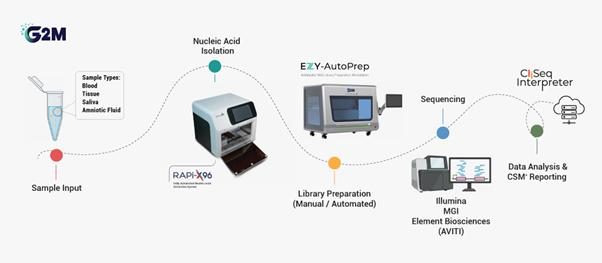
- Hybridization capture: Probe design delivers >99% coverage uniformity with a low fold-80 base penalty, supporting efficient sequencing and sensitivity.
- Works with your sequencer: The kits are compatible with major sequencing platforms, including Illumina®, MGI®, Thermo Fisher® (Ion Torrent), and Element Biosciences® (AVITI).
- Automated library prep: Runs on the EZY-AutoPrep Workstation with 24/48/96-sample throughput, reducing hands-on time and handling-related variability.
- Automated analysis with CliSeq Interpreter: This cloud-based or on-site tertiary analysis pipeline converts raw FASTQ files into annotated Clinically Significant Mutation (CSM) reports in under an hour, with reporting aligned with ACMG, ASCO, NCCN, and AMP guidelines.
For targeted BRCA testing, BRCA-Q provides a focused Real-Time PCR workflow with allele-specific detection, melting curve analysis, and an integrated internal control, validated across leading Real-Time PCR platforms.
Bringing Molecular Insights Together
Breast cancer precision testing is not defined by a single technology. The molecular question determines the testing approach.
Need comprehensive BRCA characterization? The Genes2Me BRCA 1/2 NGS Assay provides broad coverage and detection of multiple alteration types.
Need targeted detection of specified BRCA variants? The BRCA-Q Real-Time PCR Kit provides focused qualitative detection and allelic differentiation of eight specified BRCA1/2 variants.
Need to assess genomic instability beyond BRCA? CancerCheck Core evaluates genome-wide SNPs and BRCA1/2 to calculate an HRD Genomic Scar Score.
Need to monitor molecular changes over time? The ctDNA Breast Assay provides a liquid biopsy approach for assessing clinically relevant alterations, resistance, and disease evolution.
Need broader genomic profiling? Genes2Me’s multi-gene oncology panels extend testing across a wider range of biomarkers and cancer-associated genes.
Together, these approaches support a broader vision of precision breast cancer testing — matching the molecular question with the appropriate testing technology.
Talk to Us About Precision Breast Cancer Testing
This Breast Cancer Awareness Month, Genes2Me is committed to supporting laboratories and clinicians with molecular testing solutions that can turn genetic information into clinically meaningful insights.
From targeted BRCA1/2 variant detection with BRCA-Q to comprehensive genomic profiling, HRD assessment, and ctDNA-based molecular monitoring, our portfolio brings together complementary technologies for different stages and requirements of precision oncology.
Explore our oncology portfolio and find the testing approach that fits your laboratory’s needs.
● Explore Our Oncology Portfolio: www.genes2me.com
● Request a Panel Demonstration or Gene List: Contact our technical team at contact@genes2me.com or call toll-free at +91 18001 214030.
