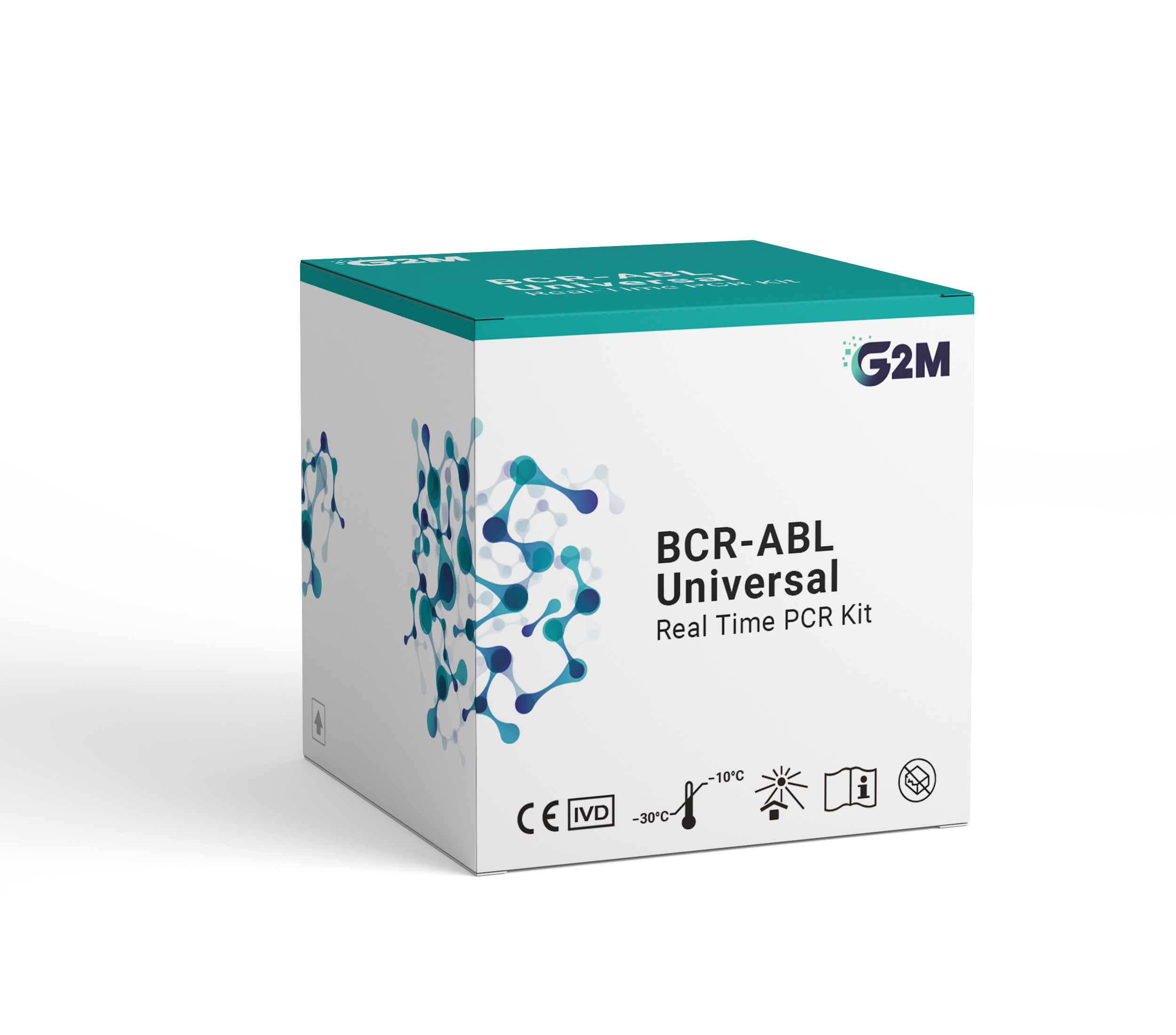
BCR-ABL Universal Real-Time PCR Kit

Product Overview


BCR-ABL1 is a clinically significant fusion gene formed by the translocation between chromosomes 9 and 22, commonly known as the Philadelphia chromosome. It is a hallmark biomarker in Chronic Myelogenous Leukemia (CML) and is also associated with certain forms of Acute Lymphoblastic Leukemia (ALL) and, in rare cases, Acute Myeloid Leukemia (AML). The presence of BCR-ABL1 fusion transcripts plays a critical role in disease diagnosis, prognosis, treatment selection, and therapeutic monitoring. Accurate detection and quantification of BCR-ABL1 transcripts are therefore essential for effective leukemia management and monitoring of minimal residual disease (MRD).

To address this critical clinical need, Genes2Me introduces the BCR-ABL Universal Real-Time PCR Kit — an advanced in vitro diagnostic solution designed for the qualitative detection and quantification of BCR-ABL1 fusion transcripts in RNA extracted from peripheral blood or bone marrow samples. The assay detects and differentiates the clinically relevant Major-p210 (e13a2 & e14a2), Minor-p190 (e1a2), and Micro-p230 (e19a2) transcripts, enabling comprehensive molecular characterisation of leukemia-associated BCR-ABL1 variants.
Targets:
BCR-ABL1 Fusion Transcripts (Major-p210, Minor-p190, Micro-p230)
Technology:
One-Step Real-Time qRT-PCR (TaqMan)
Detection:
Qualitative & Quantitative
Sample Type:
Peripheral Blood, Bone Marrow
Certification:
IVD
BCR-ABL Universal

How the Assay Works


The BCR-ABL Universal Kit utilises highly specific primers and fluorescent probe-based Real-Time PCR chemistry to simultaneously detect major, minor, and micro BCR-ABL1 transcripts in separate reactions. Extracted RNA is converted to cDNA and amplified using a one-step qRT-PCR workflow for precise transcript detection and quantification. Fluorescent reporter dyes enable accurate amplification monitoring, while the ABL1 gene serves as an internal control to validate RNA quality, reagent integrity, and assay performance. The kit also includes a complete set of quantification standards (QS1–QS5) to generate standard curves for reliable quantification of BCR-ABL1 transcript levels.

Clinical Relevance


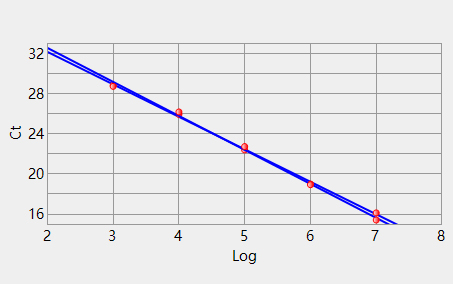
Detection of BCR-ABL1 fusion transcripts is essential for confirming the diagnosis of CML and certain leukemias, while quantitative monitoring is critical for evaluating treatment response and residual disease burden. With a limit of detection as low as 0.95 copies/µl, excellent linearity (R² = 0.999), and clinical sensitivity and specificity of 95% and 99% respectively, the BCR-ABL Universal Kit provides clinicians and laboratories with highly reliable molecular insights for personalised disease management and therapy monitoring.

Sample Type & Reporting Output


Sample Type:
Peripheral Blood, Bone Marrow
Reporting Output:
Qualitative detection and quantification of BCR-ABL1 fusion transcripts
Targets Detected:
Major-p210 (e13a2 & e14a2), Minor-p190 (e1a2), Micro-p230 (e19a2)

Key Features & Benefits


Comprehensive Transcript Detection

Detects and differentiates Major-p210, Minor-p190, and Micro-p230 BCR-ABL1 fusion transcripts.

Quantitative Capability

Includes quantification standards (QS1–QS5) for accurate measurement of BCR-ABL1 transcript levels and International Scale (IS) conversion.

High Sensitivity & Specificity

Analytical sensitivity and specificity of 100%, with a limit of detection as low as 0.95 copies/µl.

Flexible Compatibility

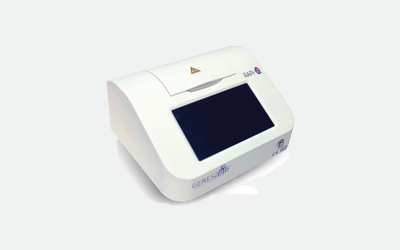
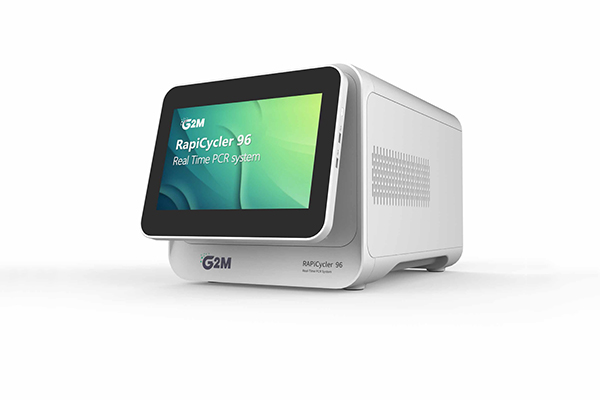
Validated on major Real-Time PCR platforms including Thermo Fisher QuantStudio™ 5, Bio-Rad CFX96, Roche LightCycler® 480, and Genes2Me RapiCycler 96.

Reliable Performance

Precision CV < 4.5% with excellent reproducibility and robust assay performance.

Fast & Efficient Workflow

Streamlined one-step qRT-PCR protocol with easy reaction setup for rapid molecular analysis.

Analytical Performance


  • Analytical sensitivity and specificity of 100% for BCR-ABL1 fusion transcript detection
  • Limit of detection as low as 0.95 copies/µl for highly sensitive molecular analysis
  • Excellent linearity with R² = 0.999 across the quantification range
  • Clinical sensitivity of 95% and clinical specificity of 99%
  • ABL1 internal control validates RNA quality, reagent integrity, and assay performance in every run
  • Quantification standards (QS1–QS5) included for standard curve generation and IS conversion
  • Precision CV < 4.5%, confirming reproducibility across runs and operators
  • 12-month shelf life with stable performance under recommended storage conditions

With the BCR-ABL Universal Real-Time PCR Kit, laboratories can achieve precise, reproducible, and clinically actionable detection of leukemia-associated fusion transcripts. By enabling accurate diagnosis and sensitive disease monitoring, the kit supports informed treatment decisions and improved patient management in haematological malignancies. Empower your laboratory with the BCR-ABL Universal Real-Time PCR Kit — because precision matters in every stage of leukemia care.

Data Analysis and Report


Oncoplot

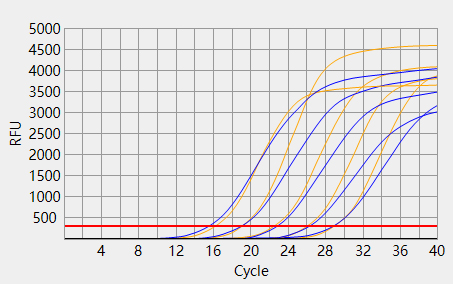
When the Ct value of the sample to be tested is outside the reference range and there is a typical S-shaped amplification curve, the test result is positive; When the Ct value of the sample to be tested is within the reference range, or the Ct value is outside the reference range but there is no typical S-shaped amplification curve, the test result is negative.

Variant

Channel 1 Slope: -3.392 Intercept: 39.372 Correlation: -0.998 Efficiency 3: 97.1430 Channel 3 Slope: -3.240 Intercept: 38.672 Correlation: -0.999 Efficiency 2: 103.52

Ordering Information


Commercial Name Old Cat No. New Cat No. Pack Size
BCR-ABL Universal Real-Time PCR Kit G610030-1 50 Tests

Product Enquiry Form


Other Products


Since its inception in 2016, Genes2me has been constantly striving towards setting a benchmark in the diagnostics space by introducing premium quality (Made in India) diagnostic kits which are CE-IVD, ISO-13485:2016, and ISO 9001:2015 certified, assuring our clients of unparalleled quality and compliance with international standards.


© 2025 Genes2me. All rights reserved.