
One Test, 7,000+ Suspects: Hunting Down Hidden Infections with PanPathogen NGS
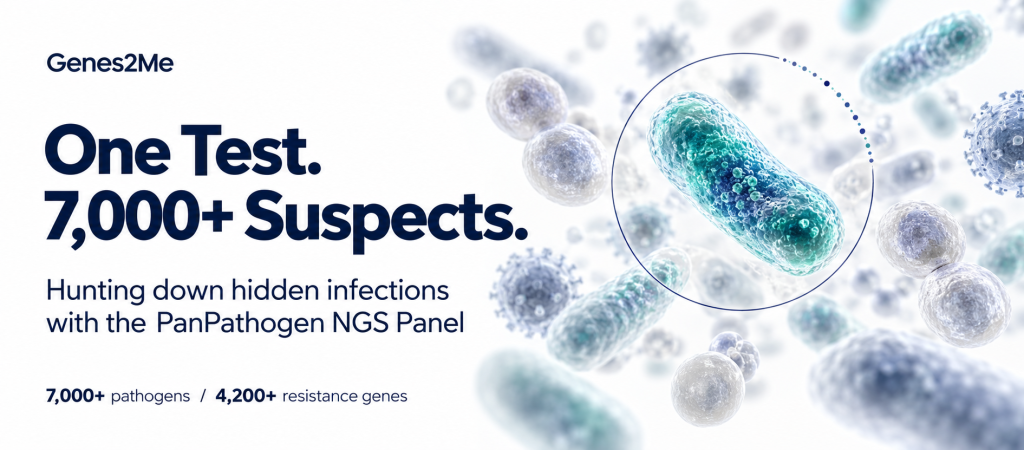
A fever that won’t break. Cultures that stay negative. A patient on antibiotics nobody can name a target for. What if one test could check for 7,000+ culprits at once?
The Silent Pandemic We’re Already Living In
Infections aren’t a solved problem. They’re getting harder. Sepsis, the body’s extreme response to infection, is linked to about 1 in 5 deaths worldwide. Germs are also learning to survive our drugs: antimicrobial resistance (AMR) directly killed 1.14 million people in 2021 and is forecast to cause 39 million+ deaths between 2025 and 2050.
The best weapon against both is speed: knowing exactly what you’re fighting before the infection, or the resistance, gets ahead.
When Cultures Stay Silent
Culture and PCR are brilliant at one question: is it this organism? They stumble when the real question is what on earth is it?
Culture needs the bug to grow. Slow growers may never show up, and antibiotics given before sampling can wipe out growth. PCR panels only find what they were built to find. Testing one suspect at a time costs days, and every day on the wrong drug adds risk.
Next-generation sequencing (NGS) flips the script. Instead of guessing, it reads the microbial DNA and RNA in a sample and reports what’s there: bacteria, viruses, fungi, and parasites in one run, with no culture needed.
One Assay. 7,000+ Suspects. Zero Guesswork.
The Genes2Me PanPathogen NGS Panel puts that power into a single, practical test. About 8,000 probes hunt for more than 7,000 organisms, covering bacteria, fungi, viruses, parasites, spirochetes and intracellular pathogens. The same run also screens 4,200+ drug-resistance genes.
It finds the usual suspects, like Staphylococcus aureus, Klebsiella, Candida and Aspergillus, and the elusive ones culture often misses, such as Nocardia, Rickettsia and Mycoplasma.
The real innovation is that G2M delivers the whole journey: library prep and capture reagents, compatibility with your existing sequencer, and CliSeq Interpreter software for the final report. One partner and one validated path, with no patchwork.
From Sample to Answer, End to End
Blood, sputum, BAL, CSF, swabs, tissue: almost any sample can go in. DNA and RNA are processed together, so RNA viruses aren’t missed. Wet-lab work fits into two working days, with an overnight capture in between.
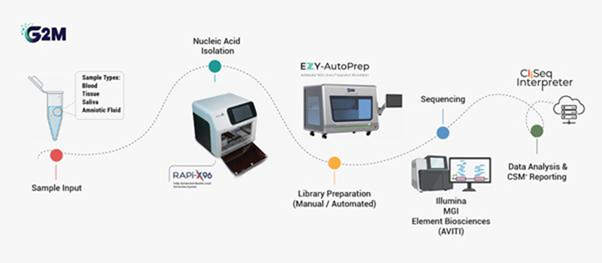
PanPathogen end-to-end workflow · 7 steps
The Hybrid Capture Edge
Here’s the catch with most clinical samples: human DNA drowns out microbial DNA. Plain shotgun sequencing spends most of its reads on the patient.
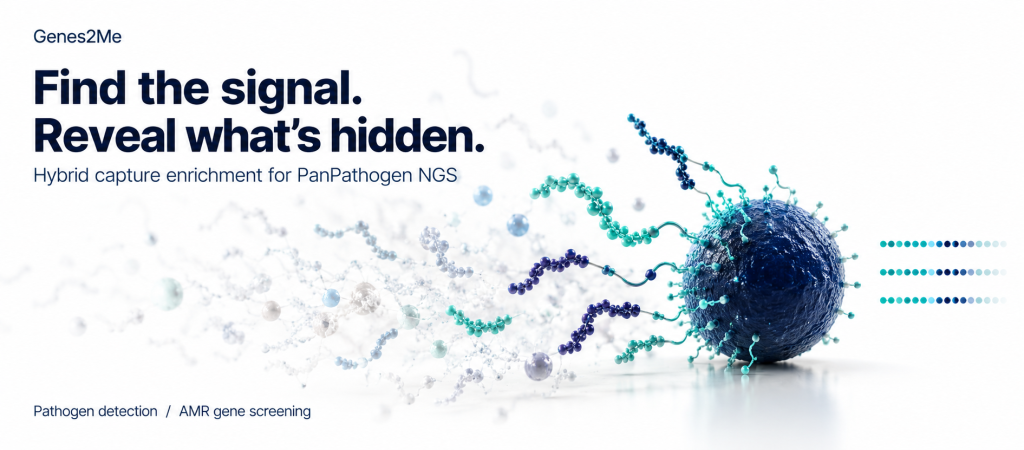
PanPathogen fixes this with hybridization capture. Biotin-tagged probes latch onto pathogen sequences, and magnetic beads pull them out while the human background washes away. The probes target the regions that tell organisms apart (16S/18S rRNA, ITS and MLST housekeeping genes) plus resistance genes. The result is trace-level detection from just ~1 GB of data.
| At a glance | |
| Organisms | 7,000+ |
| Resistance genes | 4,200+ (CARD), risk-ranked I–IV |
| Limit of detection | 100–500 copies/mL |
| Reproducibility | 96–97% |
| On-target ratio | >75% |
| Data per sample | ~1 GB |
Any Sequencer. One Interpreter. A Report That Speaks.
Platform agnostic. PanPathogen kits run on Illumina, MGI, Element AVITI and Thermo Fisher platforms, in 48- and 96-test formats.
CliSeq Interpreter. Millions of reads mean nothing until someone makes sense of them. G2M’s CliSeq Interpreter does it automatically, on the cloud or on-site, with no coding required. It runs quality checks, classifies reads against curated databases (SILVA, Greengenes, RDP, UNITE) and maps resistance genes against CARD.
A detailed CSM report. The output is a clinically significant findings (CSM) report that a clinician can read in minutes:
- every organism detected, with read counts and relative abundance
- human background reported separately, so run quality is clear
- resistance genes with mechanism, drug classes affected, likely host and risk level
- a visual chart of the microbial mix, plus methodology and limitations
It’s honest, too. Sequencing can’t always tell a colonizer from a culprit, so results are designed to support clinical judgment, not replace it.
Ready to See What Others Miss?
Sepsis, meningitis, severe pneumonia, infections in transplant and cancer patients, hospital outbreaks: when the usual tests come up empty, PanPathogen keeps looking.
One assay. 7,000+ pathogens. 4,200+ resistance genes. One partner from sample to report.
Talk to the Genes2Me team to request a sample report or bring PanPathogen NGS to your lab.
PanPathogen NGS supports, and does not replace, clinical judgment. Results should be interpreted by a qualified clinician.
