
Transforming TB Diagnostics with NGS: Enabling Rapid Detection and Drug-Resistant TB Management with Precision Genomics
Tuberculosis (TB), driven by the Mycobacterium tuberculosis complex (MTBC), remains the world’s leading infectious killer. Despite sustained global control efforts, TB remains a major public health challenge, particularly in high-burden regions. The growing prevalence of drug-resistant TB, including multidrug-resistant (MDR), extensively drug-resistant (XDR), and totally drug-resistant (TDR) forms, has significantly complicated disease management and treatment outcomes.
This escalating resistance crisis is further driven by delayed diagnosis and inadequate or ineffective treatment regimens. Together, these factors contribute to persistent transmission and poor clinical outcomes. As a result, there is an urgent and growing demand for diagnostic solutions that can deliver speed, precision, andcomprehensive resistance insights in a timely and actionable manner.
Conventional diagnostic methods often fall short, delaying treatment decisions and compromising patient outcomes. NGS is reshaping TB diagnostics by enabling fast, end-to-end genomic insights that drive accurate detection and informed clinical decisions directly from clinical samples.
Why Current TB Diagnostics Are Not Enough
Traditional TB diagnostic approaches present critical limitations:
- Culture-based methods, while considered the gold standard, require weeks to months due to the slow-growing nature of MTB. This delay significantly impacts timely treatment initiation and disease management.
- PCR-based molecular assays, although rapid, rely on predefined gene targets. This limitation often results in missed detection of emerging or rare resistance mutations.
- Line Probe Assays (LPA) provide partial resistance information but fail to offer a comprehensive genomic profile required for informed clinical decisions.
These gaps highlight the urgent need for a diagnostic approach that delivers speed, breadth, and clinical relevance simultaneously.
As a result, clinicians are often forced into empirical treatment approaches, increasing the likelihood of treatment failure and accelerating the spread of drug resistance.
NGS-Based TB Assays: A Paradigm Shift
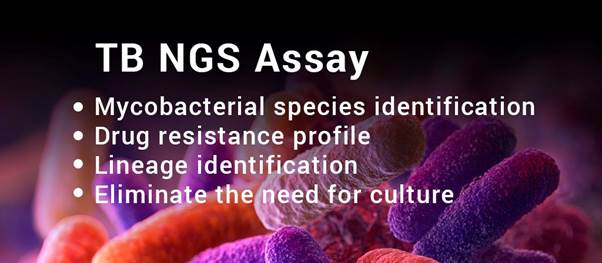
Next-Generation Sequencing (NGS) represents a transformative advancement in TB diagnostics. By enabling high-throughput analysis of MTB DNA, NGS provides simultaneous insights into pathogen detection, drug resistance mutations, and strain characterization.
Unlike conventional diagnostics, NGS-based assays can be performed directly on clinical samples, eliminating the need for culture and significantly reducing time-to-result. This enables faster and more accurate clinical decision-making, particularly in time-sensitive scenarios such as drug-resistant TB detection.
How It Works
NGS-based TB assays follow a streamlined and integrated workflow:
- Extraction of DNA directly from clinical samples such as sputum, culture isolates or bronchoalveolar lavage fluid (BALF)
- Target enrichment and library preparation for sequencing
- Parallel sequencing of multiple genomic regions
- Advanced bioinformatics analysis for mutation detection and lineage identification
At Genes2Me, we have developed a targeted TB NGS assay designed to deliver high-resolution genomic insights with clinical relevance. The assay targets approximately 100 kb of the MTB genome, enabling simultaneous analysis of 78 key drug-resistance-associated genes, mutation hotspots, and clinically relevant SNP loci.
Our assay utilizes hybridization capture–based target enrichment, ensuring:
- High specificity for critical genomic regions
- Uniform coverage across target genes
- Reliable detection of variants, even in challenging clinical samples
Comprehensive drug resistance coverage is achieved by targeting a broad spectrum of genes associated with resistance to both first-line and second-line anti-TB drugs, enabling complete and clinically actionable profiling.
- rpoB – Associated with rifampicin resistance
- katG, inhA – Isoniazid resistance markers
- gyrA, gyrB – Fluoroquinolone resistance
- rrs, eis –Aminoglycoside resistance
- embB – Ethambutol resistance
- pncA – Pyrazinamide resistance
- atpE – Bedaquiline resistance
By simultaneously capturing mutations across these genes, the assay provides a comprehensive resistance profile in a single workflow, enabling clinicians to make informed, evidence-based treatment decisions.
Clinical Impact: From Empirical to Precision Therapy
The integration of NGS into TB diagnostics represents a significant shift from empirical treatment strategies to precision-guided therapy. Genes2Me’s TB NGS solutions enable rapid and accurate MTB detection, comprehensive multi-drug resistance profiling, precision-guided treatment decisions, and real-time insight into resistance and transmission trends.
This precision-driven approach not only improves patient outcomes but also contributes to better public health management by reducing the spread of drug-resistant TB.
The Future of TB Diagnostics
Global health bodies, including the World Health Organization (WHO), have recognized the growing importance of NGS in TB diagnostics, particularly for the detection of drug-resistant strains. The integration of NGS into diagnostic workflows is expected to play a central role in future TB management strategies.
Summary
NGS is redefining how we detect and manage tuberculosis. By combining speed, accuracy, and comprehensive genomic insights, NGS-based TB assays enable early and precise detection of Mycobacterium tuberculosis, rapid identification of drug resistance, informed selection of targeted treatment regimens, and effective surveillance of resistance patterns and transmission dynamics, empowering clinicians to deliver timely, targeted and effective TB care.
At Genes2Me , we are at the forefront of this transformation, enabling laboratories and clinicians to harness the power of genomics to improve TB detection, enhance treatment outcomes, and strengthen global disease control.
In the fight against drug-resistant TB, where time is critical and resistance patterns are complex, NGS offers a powerful solution, transforming diagnostics from reactive testing into proactive, data-driven clinical care.
